structural cracks | epoxy grouting | monolithic bonding
RCC Crack Repair & Epoxy Injection
Precision crack repair for beams, slabs, columns, and walls using suitable injection systems after identifying the crack cause, depth, and movement behavior.
Structural rehabilitation contractors in Lucknow
Fiable provides engineering-led structural rehabilitation in Lucknow for distressed RCC buildings, industrial structures, basements, columns, beams, slabs, and aging concrete assets. We repair cracks, restore damaged concrete, treat reinforcement corrosion, and strengthen structural members using method-led systems such as epoxy injection, jacketing, micro-concrete repair, and carbon fiber wrapping.
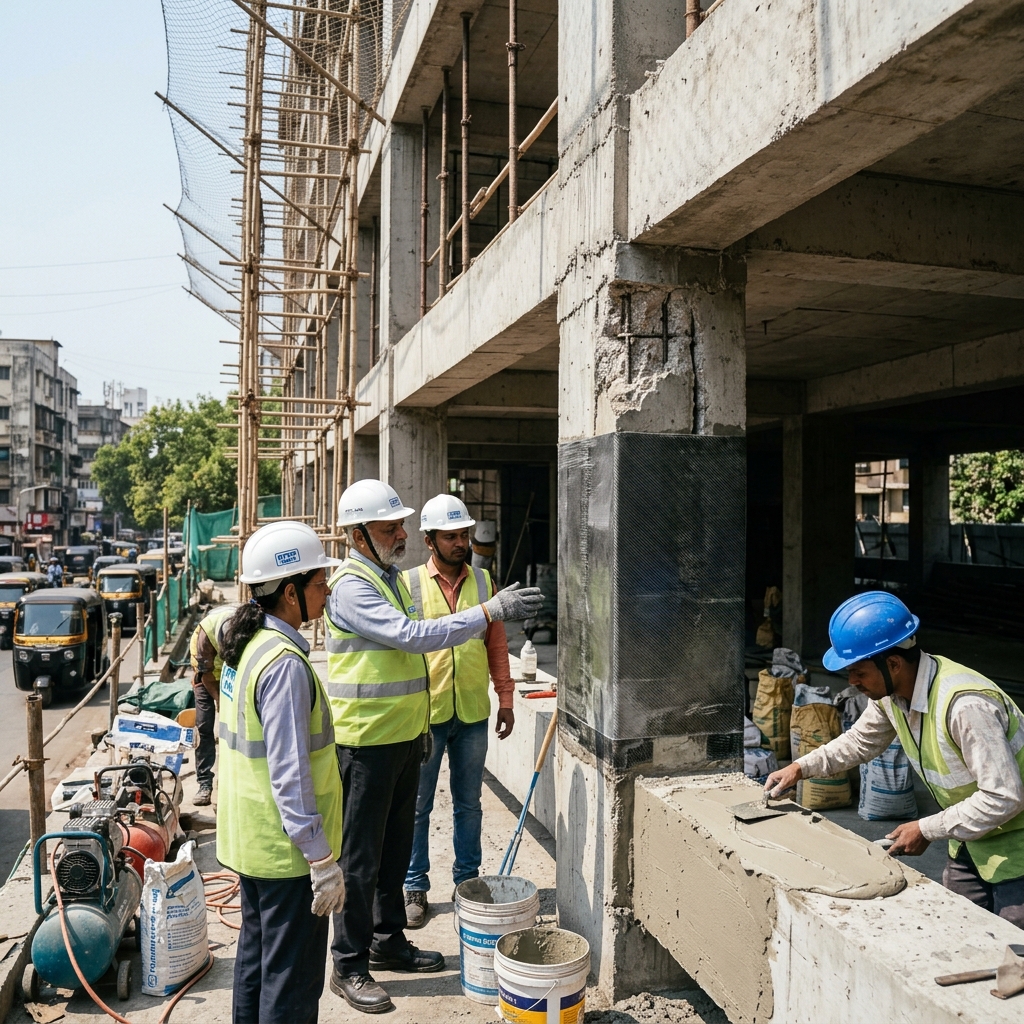
Structural rehabilitation is not cosmetic patchwork. Every project starts with distress mapping, crack behavior review, concrete condition assessment, and repair-system selection. The goal is to restore safety, improve durability, and extend the service life of the structure with the least practical disruption.
Structural rehabilitation scope
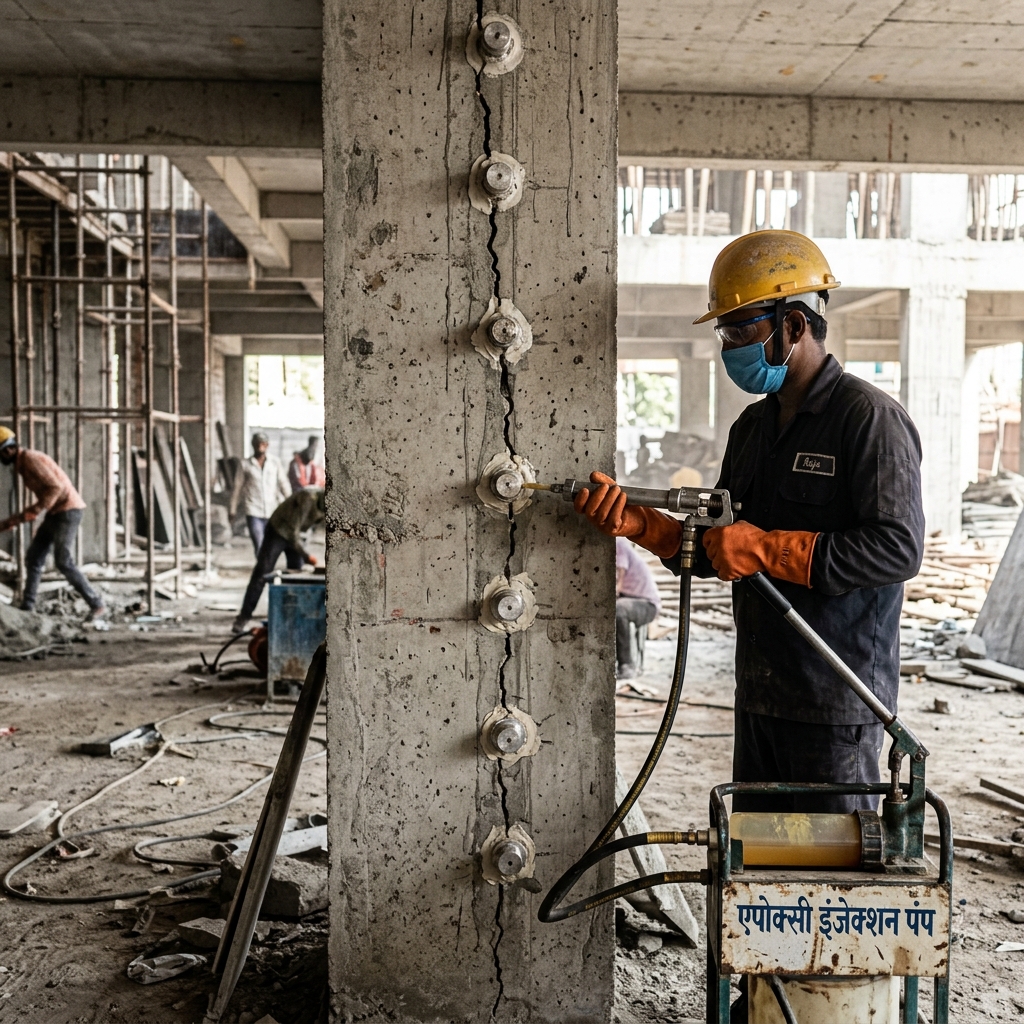
structural cracks | epoxy grouting | monolithic bonding
Precision crack repair for beams, slabs, columns, and walls using suitable injection systems after identifying the crack cause, depth, and movement behavior.
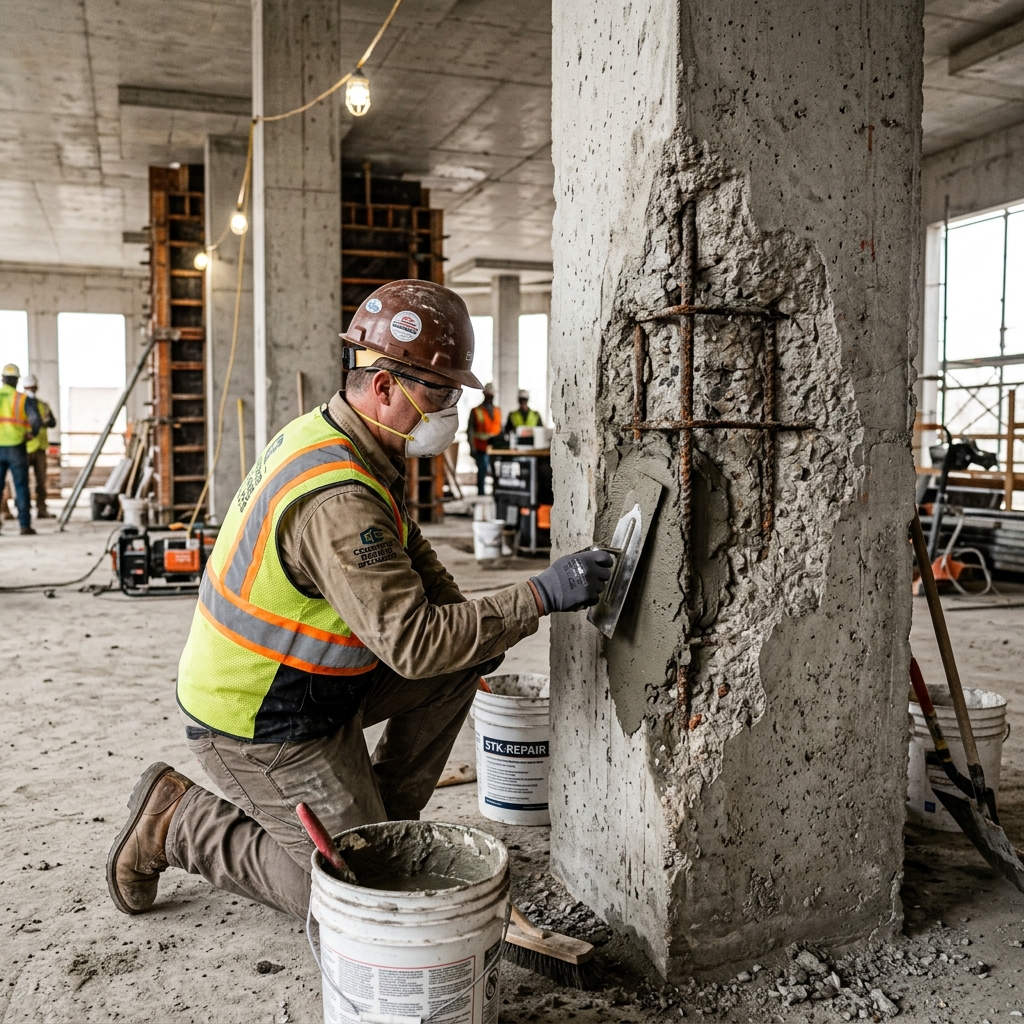
load upgrade | jacketing | section strengthening
Strengthening solutions for distressed or under-designed structural members using RCC jacketing, steel jacketing, micro-concrete, anchors, and engineered repair systems.
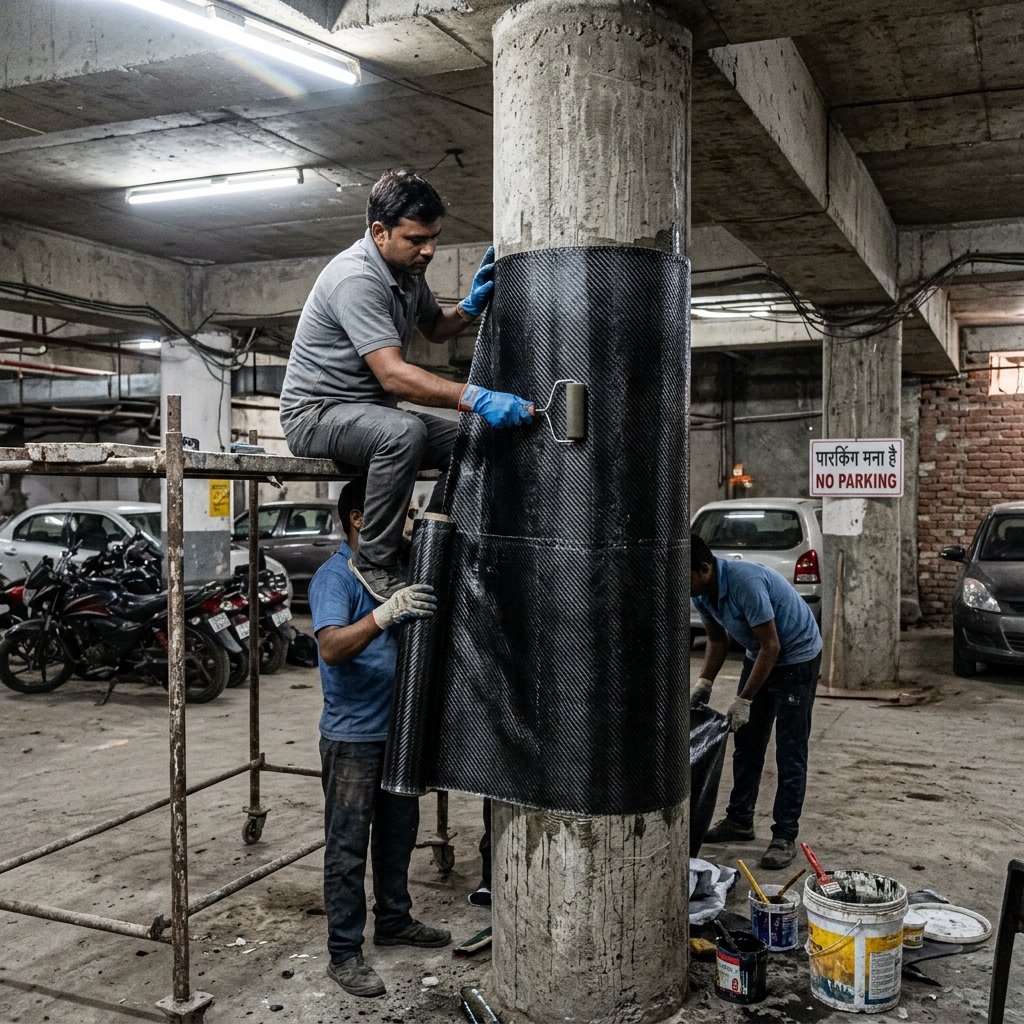
CFRP wrapping | lightweight reinforcement | low downtime
Non-invasive structural strengthening for columns, beams, slabs, and critical zones where added strength is required without heavy demolition or major dimensional change.
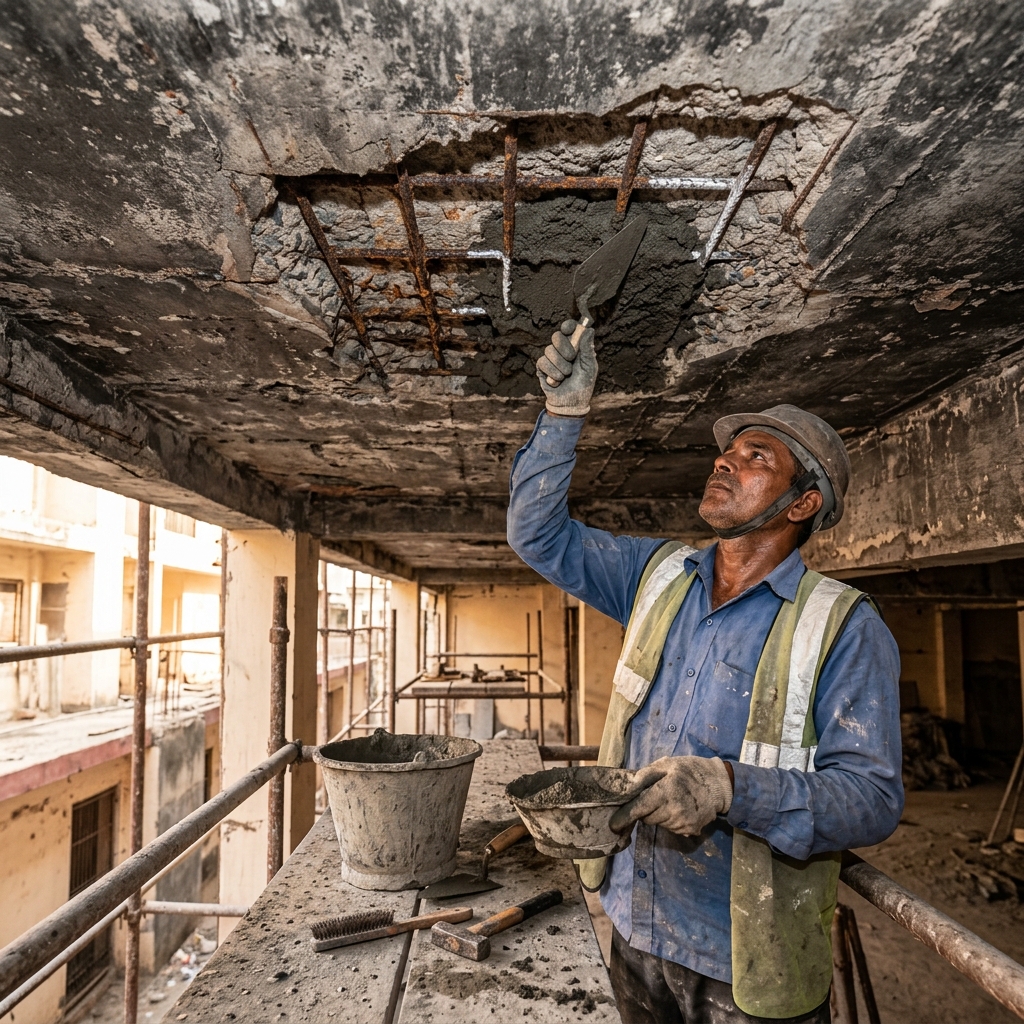
rebar treatment | spalling repair | protective coating
Repair of damaged concrete caused by corrosion, moisture ingress, carbonation, weak cover, and aging, followed by protective systems to improve durability.
Service areas
We work across residential, commercial, institutional, and industrial properties where structural distress, concrete deterioration, cracking, corrosion, or strengthening requirement needs a method-led repair approach.
RCC buildings, apartments, villas, factories, basements, and commercial structures.
RCC buildings, apartments, villas, factories, basements, and commercial structures.
RCC buildings, apartments, villas, factories, basements, and commercial structures.
RCC buildings, apartments, villas, factories, basements, and commercial structures.
RCC buildings, apartments, villas, factories, basements, and commercial structures.
RCC buildings, apartments, villas, factories, basements, and commercial structures.
RCC buildings, apartments, villas, factories, basements, and commercial structures.
RCC buildings, apartments, villas, factories, basements, and commercial structures.
RCC buildings, apartments, villas, factories, basements, and commercial structures.
RCC buildings, apartments, villas, factories, basements, and commercial structures.
RCC buildings, apartments, villas, factories, basements, and commercial structures.
RCC buildings, apartments, villas, factories, basements, and commercial structures.
Structural repair specialists
We do not cover cracks with quick plaster repairs. We study the distress pattern, moisture exposure, reinforcement condition, load behavior, and concrete damage before selecting the right rehabilitation method. The result is a repair that supports safety, service life, and future maintenance.
Visual inspection, crack mapping, distress documentation, and structural condition review
Identification of failure causes such as corrosion, overload, leakage, poor concrete, settlement, or age-related deterioration
Selection of suitable repair method: epoxy injection, polymer mortar, micro-concrete, jacketing, FRP wrapping, or corrosion repair
Surface preparation, loose concrete removal, rebar cleaning, bonding treatment, and structural repair execution
Final finishing, protective coating where required, quality checks, and maintenance recommendations
Structural rehabilitation means repairing and strengthening an existing building or structure so it can safely perform its intended function again. It may include crack repair, concrete restoration, rebar corrosion treatment, jacketing, carbon fiber wrapping, and load-capacity improvement.
Common signs include deep cracks in beams or columns, exposed steel, rust stains, concrete spalling, slab sagging, leakage-damaged concrete, hollow plaster sounds, widening cracks, or visible distress in load-bearing members. A site inspection is recommended before deciding the repair method.
Epoxy injection can restore bonding in many non-moving structural cracks, but it is not always the complete solution. If the crack is caused by overload, corrosion, settlement, or ongoing movement, strengthening or corrosion repair may also be needed.
Structural repair restores damaged or deteriorated elements, while structural strengthening increases the load-carrying capacity or performance of the structure. Many rehabilitation projects require both repair and strengthening.
Yes. Depending on the condition, RCC buildings can often be strengthened using methods such as concrete jacketing, steel jacketing, carbon fiber wrapping, micro-concrete repair, anchors, and protective coating systems with limited demolition.
Yes. Structural rehabilitation should not start with guesswork. Fiable reviews cracks, moisture paths, concrete condition, reinforcement exposure, usage, and distress patterns before recommending a suitable repair or strengthening system.
Get expert help today from trusted waterproofing contractors.